
Dissolved oxygen (DO) content is a critical parameter for assessing the self-purification capacity of aquatic environments and evaluating overall water quality. The concentration of dissolved oxygen directly influences the composition and distribution of aquatic biological communities. For most fish species, DO levels must exceed 4 mg/L to support normal physiological functions. Consequently, dissolved oxygen is a key indicator in routine water quality monitoring programs.The principal methods for measuring dissolved oxygen in water include the iodometric method, electrochemical probe method, conductivity method, and fluorescence method. Among these, the iodometric method was the first standardized technique developed for DO measurement and remains the reference (benchmark) method. However, this method is susceptible to significant interference from reducing substances such as nitrite, sulfides, thiourea, humic acid, and tannic acid. In such cases, the electrochemical probe method is recommended due to its high accuracy, minimal interference, stable performance, and rapid measurement capability, making it widely adopted in practical applications.
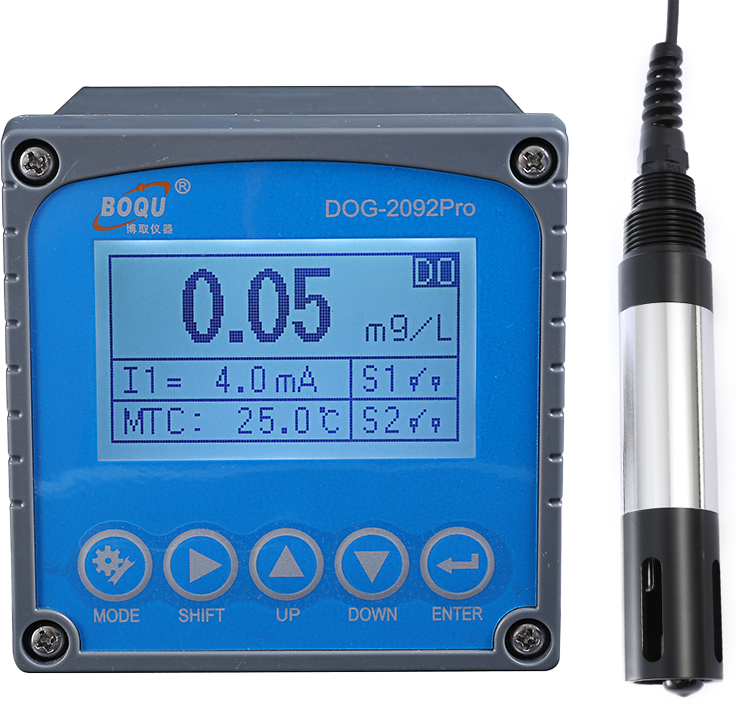
The electrochemical probe method operates on the principle that oxygen molecules diffuse through a selective membrane and are reduced at the working electrode, generating a diffusion current proportional to the oxygen concentration. By measuring this current, the dissolved oxygen concentration in the sample can be accurately determined. This paper focuses on the operational procedures and maintenance practices associated with the electrochemical probe method, aiming to enhance understanding of instrument performance characteristics and improve measurement accuracy.
1.Instruments and Reagents
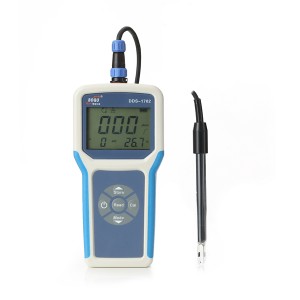
Primary instruments: multifunctional water quality analyzer
Reagents: those required for the iodometric determination of dissolved oxygen
2. Full-Scale Calibration of the Dissolved Oxygen Meter
Laboratory Method 1 (Saturated Air-Water Method): At a controlled room temperature of 20 °C, place 1 L of ultrapure water into a 2 L beaker. Aerate the solution continuously for 2 hours, then cease aeration and allow the water to stabilize for 30 minutes. Initiate calibration by placing the probe in the water and stirring with a magnetic stirrer at 500 rpm or gently moving the electrode within the aqueous phase. Select “saturated air-water calibration” on the instrument interface. Upon completion, the full-scale reading should indicate 100%.
Laboratory Method 2 (Water-Saturated Air Method): At 20 °C, moisten the sponge inside the probe’s protective sleeve until fully saturated. Carefully blot the surface of the electrode membrane with filter paper to remove excess moisture, reinsert the electrode into the sleeve, and allow it to equilibrate for 2 hours before initiating calibration. Select “water-saturated air calibration” on the instrument interface. Upon completion, the full-scale reading typically reaches 102.3%. Generally, results obtained via the water-saturated air method are consistent with those from the saturated air-water method. Subsequent measurements of either medium typically yield values around 9.0 mg/L.
Field Calibration: The instrument should be calibrated prior to each use. Given that ambient outdoor temperatures often deviate from 20 °C, field calibration is best performed using the water-saturated air method within the probe sleeve. Instruments calibrated using this approach exhibit measurement errors within acceptable limits and remain suitable for field application.
3. Zero-Point Calibration
Prepare an oxygen-free solution by dissolving 0.25 g of sodium sulfite (Na₂SO₃) and 0.25 g of cobalt(II) chloride hexahydrate (CoCl₂·6H₂O) in 250 mL of ultrapure water. Immerse the probe in this solution and gently agitate. Initiate zero-point calibration and wait for the reading to stabilize before confirming completion. Instruments equipped with automatic zero compensation do not require manual zero calibration.
Post time: Dec-09-2025
Products categories
-
Wholesale China Dissolved Oxygen Meter For Wast...
-

China Wholesale Laboratory Conductivity Meter M...
-
Wholesale China Dissolved Oxygen Portable Meter...
-
Wholesale China Online Ph Meter Quotes Manufact...
-
China Wholesale Ph Ec Meter Factory Suppliers -...
-
Wholesale China Ph Orp Monitor Suppliers Factor...
-
China Wholesale Dissolved Oxygen Meter Price Ma...
-
Wholesale China Ph Digital Sensor Factory Suppl...
-
Wholesale China Tds And Ec Meter Factory Suppli...
-
IoT Digital Turbidity Sensor
-
China Wholesale Water Conductivity Meter Quotes...
-
China Wholesale Inductive Conductivity Quotes M...


