
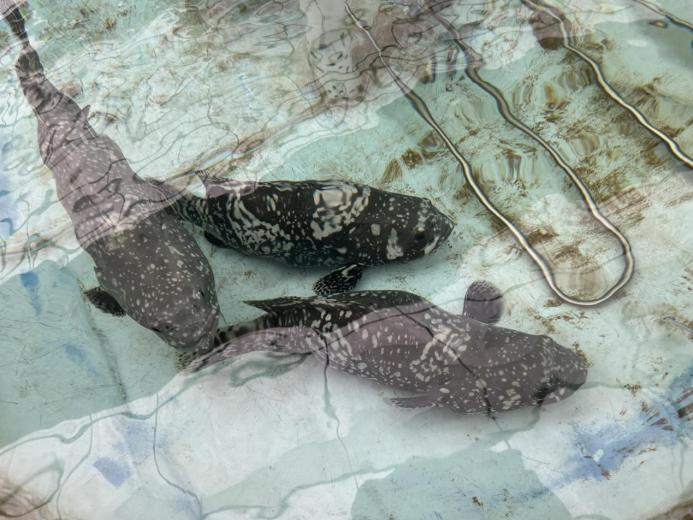
The aquaculture industry has experienced sustained growth in recent years, attracting increasing interest from new entrants. However, successful aquaculture hinges critically on water quality management—a factor often underestimated by practitioners. Suboptimal or unmonitored water conditions constitute a leading cause of production failure, disease outbreaks, and economic loss. As regulatory standards tighten and sustainability expectations rise, systematic, science-based water quality monitoring has become indispensable for modern aquaculture operations.
I. The Critical Role of Water Quality Monitoring in Aquaculture
Water quality is the foundational determinant of aquatic organism health, productivity, and welfare. It directly governs physiological processes—including metabolism, respiration, digestion, immune response, growth, and reproduction—thereby shaping both yield and product quality. A stable, species-appropriate aquatic environment minimizes stress, suppresses pathogen proliferation, and enhances feed conversion efficiency. Conversely, deviations in key parameters—such as hypoxia, extreme or unstable pH, elevated ammonia nitrogen, or excessive organic loading—can trigger rapid physiological deterioration, mass mortality, and substantial financial losses. Consequently, continuous, accurate, and actionable water quality monitoring—coupled with timely environmental intervention—is a cornerstone of evidence-based, resilient aquaculture management.
II. Essential Water Quality Monitoring Indicators in Aquaculture
(1) Physical Parameters
1. Temperature
A primary driver of metabolic rate, feeding behavior, enzymatic activity, and developmental timing. Optimal ranges vary by species: 20–30 °C for most marine finfish; 12–18 °C for turbot (Scophthalmus maximus); and >22 °C for penaeid shrimp (e.g., Litopenaeus vannamei). The MPG-6099PLUS monitors temperature across 0–60 °C with ±0.5 °C accuracy and 0.1 °C resolution, enabling precise thermal regime management.
2. Salinity
Governs osmoregulatory demand and influences ion balance, gill function, and larval survival. Typical seawater aquaculture operates at 30–35 ppt; however, euryhaline species (e.g., tilapia) tolerate broader ranges (0–40 ppt), whereas stenohaline deep-sea species require exceptional salinity stability. Real-time salinity sensing allows proactive adjustment to prevent osmotic stress.
(2) Chemical Parameters
1. pH
Reflects hydrogen ion concentration and strongly affects enzyme kinetics, gill permeability, ammonia toxicity (NH₃ vs. NH₄⁺), and nitrification efficiency. Recommended ranges are 6.5–8.5 for freshwater systems and 7.8–8.5 for marine systems, with diurnal fluctuations ideally <0.5 units. The MPG-6099PLUS measures pH from 0–14 with ±0.10 pH accuracy and 0.01 pH resolution, supporting early detection of acidification or alkalization trends.
2. Dissolved Oxygen (DO)
An absolute requirement for aerobic respiration. Chronic DO <5 mg/L impairs growth and immunity; acute depletion (<2 mg/L) causes surface crowding ("gasping") and mortality. Larval stages typically require >6 mg/L. Utilizing fluorescence-based sensing, the MPG-6099PLUS delivers DO measurements from 0–20 mg/L (±2% FS, 0.01 mg/L resolution), facilitating dynamic aeration control.
3. Chemical Oxygen Demand (COD)
A proxy for biodegradable organic load. Elevated COD indicates excessive feed waste, fecal accumulation, or algal decay—processes that deplete DO, promote anaerobic conditions, and foster pathogenic bacteria. Continuous COD monitoring informs biofiltration optimization and water exchange scheduling.
4. Ammonia Nitrogen (NH₃-N + NH₄⁺-N)
A potent metabolic toxin derived from excretion and decomposition. Unionized ammonia (NH₃) is highly toxic, especially at high pH and temperature. Thresholds vary by life stage but generally require maintenance below 0.02 mg/L NH₃-N for sensitive species. Sensor-integrated monitoring enables rapid mitigation via aeration, water exchange, or bioaugmentation with nitrifying bacteria.
5. Total Alkalinity and Total Hardness
Total alkalinity (as CaCO₃) buffers pH fluctuations and supports nitrification; target levels are ≥100 mg/L (breeding) and ≥120 mg/L (larval rearing) in shrimp aquaculture. Total hardness (as CaCO₃), reflecting Ca²⁺ and Mg²⁺ concentrations, underpins skeletal development, molting, and osmoregulation; optimal marine ranges are 80–120 mg/L. Monitoring these parameters guides targeted mineral supplementation (e.g., CaCO₃, MgSO₄).
(3) Supplementary Biological and Contaminant Parameters
1. Turbidity
Quantifies suspended solids—including silt, phytoplankton, and detritus—that impair light penetration, reduce photosynthetic oxygen production, clog gills, and interfere with feeding. Persistent turbidity >25 NTU warrants filtration or sedimentation interventions.
2. Heavy Metals
Bioaccumulative contaminants (e.g., Cu, Hg, Cd, Pb) compromise organism health and food safety. Regulatory limits for marine aquaculture include Cu ≤ 0.01 mg/L and Cr ≤ 0.1 mg/L. Routine screening safeguards product compliance and ecosystem integrity.

III. Technical Advantages of the Shanghai BOQU MPG-6099PLUS Multi-Parameter Water Quality Monitor
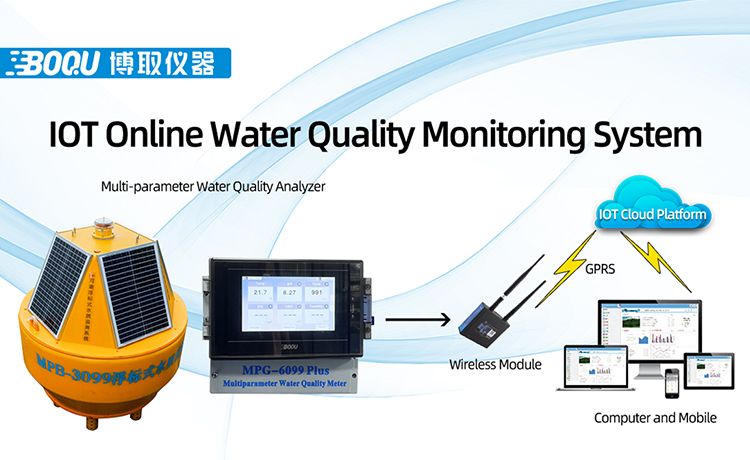
The MPG-6099PLUS is an integrated, intelligent monitoring platform engineered specifically for aquaculture, wastewater treatment, and environmental surveillance applications. Its design emphasizes operational robustness, analytical precision, and user-centric functionality:
Modular Parameter Configuration
Users may select and combine up to nine parameters—including core indicators (temperature, pH, DO, salinity, NH₃-N, COD, alkalinity, hardness) and auxiliary metrics (turbidity, heavy metals)—tailored to species-specific requirements and production phases.
On-Site Intelligent Data Management
Featuring a 7-inch capacitive touchscreen interface, the system enables real-time multi-parameter visualization, historical trend analysis, customizable alarm thresholds, and one-click report generation—eliminating dependency on external software or PCs.
Secure Remote Connectivity
Supports dual-mode telemetry (4G LTE + LoRaWAN) and seamless integration with the Bozei Cloud Platform. Via web dashboard or mobile application, users access live data, configure alerts, download datasets, and manage multiple monitoring nodes remotely.
Low-Operational-Overhead Design
Incorporates self-cleaning sensor modules, automated calibration prompts, and anti-fouling flow cells—reducing manual intervention frequency by >70% compared to conventional probes—and significantly lowering total cost of ownership.
IV. Field Validation and Operational Impact
At a commercial Pacific white shrimp (Litopenaeus vannamei) farm in Guangdong Province, deployment of the MPG-6099PLUS enabled continuous 24-hour monitoring of temperature, pH, DO, NH₃-N, and sulfide. Platform analytics revealed recurrent pre-dawn DO minima (4.2–4.8 mg/L), prompting optimized aeration scheduling. Concurrent real-time NH₃-N and sulfide tracking facilitated preemptive water exchange and probiotic dosing. Over six consecutive production cycles, this data-driven approach increased post-larval survival by 15.3%, reduced average grow-out duration by 7.2 days, and improved feed conversion ratio (FCR) by 0.18 points—demonstrating measurable gains in biological performance and economic efficiency.
V. Conclusion
The Shanghai BOQU MPG-6099PLUS represents a comprehensive, scalable solution for precision water quality management in aquaculture. Its flexible parameter architecture, laboratory-grade measurement fidelity, intuitive local interface, and enterprise-ready remote capabilities collectively address the technical, operational, and strategic challenges inherent in intensive and semi-intensive systems. As the sector advances toward digitalization, traceability, and climate resilience, instruments of this calibre will serve not only as monitoring tools—but as foundational enablers of sustainable intensification, regulatory compliance, and long-term industry viability.
Post time: Mar-16-2026
Products categories
-
Wholesale China Portable Ph Ec Tds Temperature ...
-
China Wholesale Dissolved Oxygen Meter Waste wa...
-
China Wholesale Aquarium Ph Test Meter Factory ...
-
China Wholesale Monitor Ph Factory Suppliers -...
-
China Wholesale Conductivity Meter Electrode Fa...
-
Wholesale China Ph Conductivity Orp Meter Facto...
-
Wholesale China Low Maintenance Ph Meter Factor...
-

Portable Multi-parameter analyzer and sensor me...
-

China Wholesale Online Ph Sensor Factory Suppli...
-

On-line Analyzers Residual Chlorine Chlorine Di...
-
Wholesale China In Line Ph Controller Quotes Ma...
-
Wholesale China Aquarium Ph Test Meter Quotes M...


