
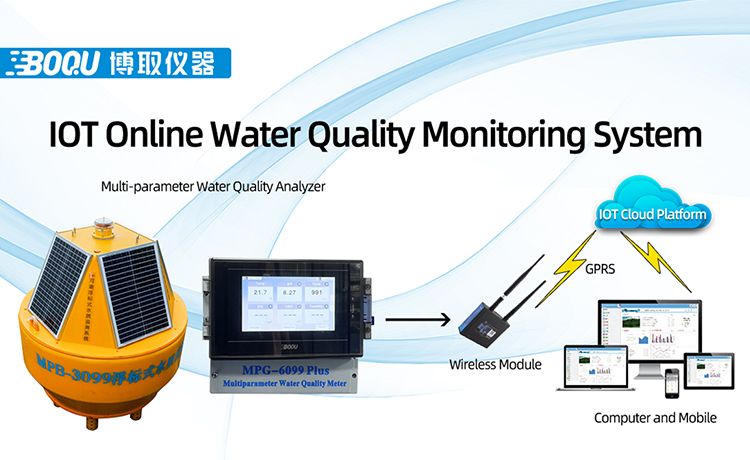
The sustained growth of the global population and ongoing economic development have led to increased water consumption, growing water resource scarcity, and the deterioration of aquatic environmental quality and ecosystems. These challenges have imposed higher demands on the water treatment and environmental protection sectors, thereby driving further expansion of the online water quality analysis instrument market.
We are currently in an era defined by the Internet of Things (IoT), big data, and artificial intelligence, where data acquisition plays a critical role. As a key component of the IoT perception layer, online water quality analysis instruments are increasingly required to serve as reliable sources of real-time data. Consequently, there is a rising demand for modern instruments that offer high reliability, low energy consumption, minimal maintenance requirements, and cost-effectiveness. The technological advancement of these instruments has been enabled by progress in multiple disciplines, including analytical chemistry, materials science, communication technologies, computer science, and process control theory. Continued innovation in these fields will further support the evolution and enhancement of online water quality analysis instrumentation.The Development Prospects of Online Water Quality Analysis Instrument Technology and Market
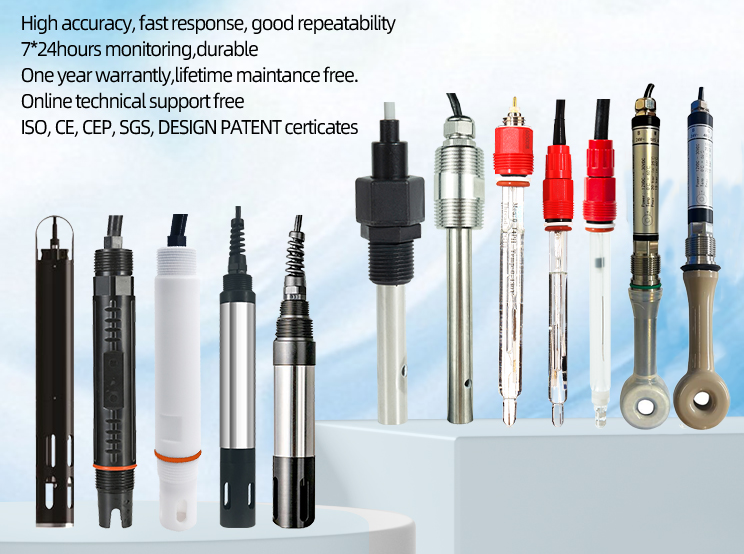
The sustained growth of the global population and ongoing economic development have led to increased water consumption, growing water resource scarcity, and the deterioration of aquatic environmental quality and ecosystems. These challenges have imposed higher demands on the water treatment and environmental protection sectors, thereby driving further expansion of the online water quality analysis instrument market.
We are currently in an era defined by the Internet of Things (IoT), big data, and artificial intelligence, where data acquisition plays a critical role. As a key component of the IoT perception layer, online water quality analysis instruments are increasingly required to serve as reliable sources of real-time data. Consequently, there is a rising demand for modern instruments that offer high reliability, low energy consumption, minimal maintenance requirements, and cost-effectiveness. The technological advancement of these instruments has been enabled by progress in multiple disciplines, including analytical chemistry, materials science, communication technologies, computer science, and process control theory. Continued innovation in these fields will further support the evolution and enhancement of online water quality analysis instrumentation.
Moreover, with the vigorous promotion of the green analytical chemistry concept and the continuous emergence of green analytical technologies, future online water quality analysis instruments will aim to minimize the use and generation of toxic chemicals. In their design, efforts will be made to reduce energy consumption and water usage during the analytical process. Numerous emerging measurement principles—such as flow cytometry, biological early warning systems, nucleic acid enzyme-based specific reactions for heavy metals, and microfluidic technology—are already being integrated into, or are expected to be adopted by, online water quality analysis instruments in the near future. Advanced materials including quantum dots, graphene, carbon nanotubes, biochips, and hydrogels are also increasingly being applied in the field of water quality monitoring.
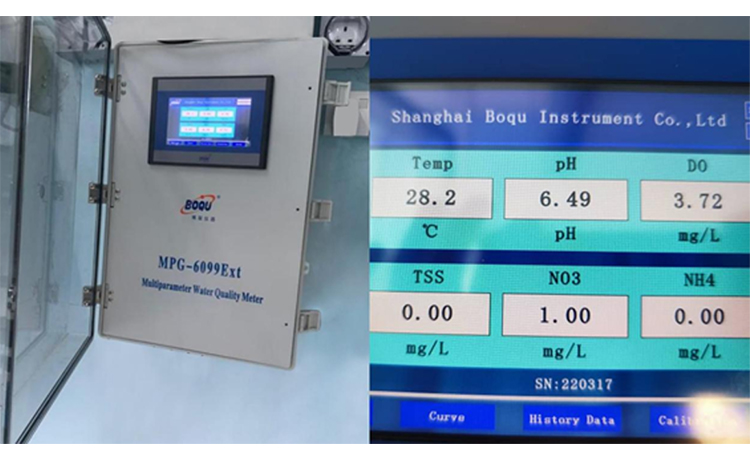
In terms of data processing, a growing number of advanced algorithms and water quality modeling techniques continue to emerge. These advancements will enhance the functionality of next-generation online water quality analysis instruments and improve post-processing capabilities, enabling the delivery of more meaningful and actionable water quality data. As a result, not only hardware and analytical methodologies but also software and data processing technologies will become integral components of these instruments. In the future, online water quality analysis instruments are expected to evolve into integrated systems combining "hardware + materials + software + algorithms."
With the development and application of novel analytical principles and methods, along with the incorporation of advanced materials, sensor adaptability to complex water matrices will be significantly improved. Concurrently, the integration of Internet of Things (IoT) technology will enable remote, real-time monitoring and management of sensor lifespan and operational status, thereby enhancing maintenance efficiency and reducing associated costs.
Furthermore, with the mature application of 3D printing technology, customized design and manufacturing tailored to specific water quality conditions will become feasible. For instance, different materials, structures, and fabrication processes can be employed to produce sensors optimized for drinking water, seawater, or industrial wastewater—even when measuring the same water quality parameter—thus meeting diverse environmental requirements.
More importantly, similar to other electronic devices, the cost of sensors is expected to decrease dramatically due to large-scale deployment in the IoT era. At that stage, disposable, maintenance-free online water quality sensors may become a practical reality. The high cost associated with complex online analyzers will also diminish through economies of scale. Maintenance challenges can be further mitigated through design optimization, the use of advanced materials, and durable components. Notably, advances in Industrial Internet of Things (IIoT) technology allow for the integration of auxiliary sensors into instrument hardware to capture key performance parameters and dynamic change curves during operation. By intelligently identifying inflection points, slopes, peaks, and integral areas, these data can be translated into mathematical models that describe "instrument behavior." This enables remote diagnostics, predictive maintenance, and targeted pre-emptive interventions, ultimately reducing maintenance frequency and costs, and further promoting the widespread adoption of online water quality analysis instruments.
From the perspective of market development, similar to other emerging technologies and industries, the online water quality analysis instrument market is expected to undergo a phased evolution—from initial slow growth to a subsequent period of rapid expansion.
In the early stage, market demand was constrained by two primary factors. The first was economic feasibility, particularly the cost-benefit analysis. At that time, investment in and operational expenses for online analytical instruments were relatively high compared to the low costs associated with water resource usage, water pricing, and wastewater discharge fees, making such technology less economically attractive.
Post time: Jan-27-2026
Products categories
-
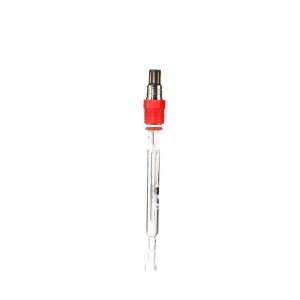
China Wholesale High Quality Ph Meter Factory S...
-

Wholesale China In Line Dissolved Oxygen Meter ...
-
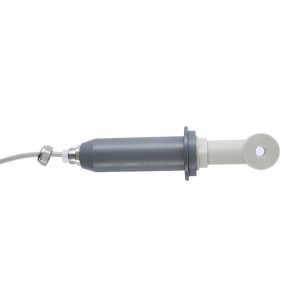
China Wholesale Ultrapure Water Conductivity Me...
-

Wholesale China Conductivity Sensor Factory Sup...
-
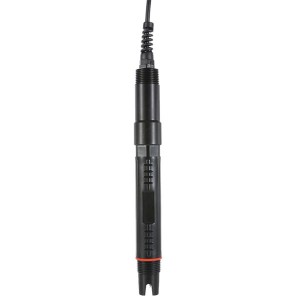
China Wholesale Multiparameter Ph Meter Quotes ...
-
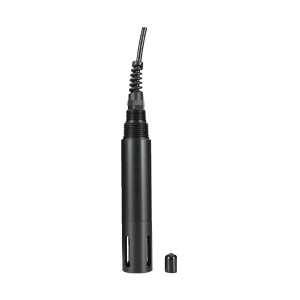
China Wholesale Chemical Oxygen Demand Analysis...
-
Wholesale China Portable Ph Analyzer Suppliers ...
-
Wholesale China Submersible Ph Probe Suppliers ...
-
China Wholesale Ph And Ec Sensor Suppliers Fact...
-
Wholesale China Portable Ph Ec Meter Factory Su...
-
Wholesale China Ph Sensor Quotes Manufacturer -...
-
China Wholesale Industrial Ph Sensor Suppliers ...


