Leave Your Message
0%

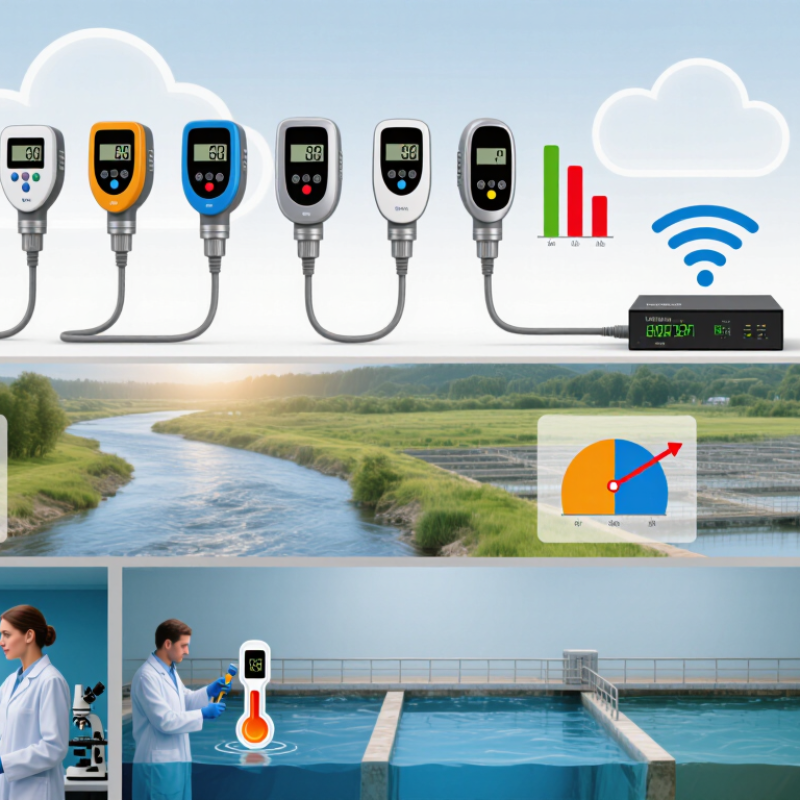
If you're looking for the China Best IoT Water Quality Sensor Manufacturer, it takes more than comparing prices or scrolling through product photos. What really matters for reliable monitoring? Accurate measurements, stable communication, and some real-world field experience. A good IoT Water Quality Sensor should measure the key indicators—pH, temperature, turbidity, conductivity, and dissolved oxygen. And each one can point to a different kind of problem inside a tank, river, aquaculture pond, or treatment facility.

Dr. Rita Colwell — a respected water scientist — once put it pretty simply: “Water is the most precious resource on Earth.” And honestly, that kind of sums up why this technology matters. Sensors shouldn’t just make fancy dashboards look good; they need to actually protect real water resources. If you're looking for a truly reliable IoT-based water quality monitoring system, it should come with things like calibration records, clear guidance on cleaning the sensors, data alerts, and secure cloud access. And when readings look off? It ought to support laboratory verification too.

Big names like Hach and YSI—plus a few solid Chinese specialists—usually give you technical docs, replacement parts, and engineering support that actually answers back. But let's be real: no supplier gets it perfect. Sensors drift sometimes. Biofouling can throw readings off. And wireless signals? They can get flaky around concrete buildings or out at remote ponds. Those are things worth knowing honestly before you buy.

When you're looking at a serious manufacturer, they should be upfront about things like accuracy ranges, operating temperatures, how often maintenance is needed, and the conditions they test under. And honestly? Field performance matters just as much—if not more—than lab claims. So buyers, don't be shy: ask for sample reports, calibration procedures, and references from actual customers. In this article, we'll dig into the practical capabilities, manufacturing quality, and service reliability of some of the leading IoT water monitoring suppliers in China.

China Best IoT Water Quality Sensor Manufacturer?

What Is an IoT Water Quality Sensor?

An IoT water quality sensor is a measuring device connected to a digital network. It captures water conditions and sends readings to a platform for review. Common measurements include temperature, pH, turbidity, conductivity, dissolved oxygen, and chlorine. Some systems also monitor nitrate or oxidation-reduction potential. The sensor package should match the water source. A drinking-water station needs different controls than a fish pond. Details matter.

In field work, placement often matters as much as sensor quality. A probe near an inlet may report unusually clean or dirty water. Mounting depth, flow, sunlight, and sediment can change results. The device may transmit through cellular, Wi-Fi, or low-power networks. Alerts can flag sudden turbidity increases or falling oxygen levels. Yet an alert is not proof of contamination. Sensors drift. Biofilm builds on surfaces, and batteries weaken in cold weather. Regular cleaning and calibration against trusted reference methods reduce false decisions.

Reliable IoT monitoring needs more than frequent data. Operators should record calibration dates, maintenance actions, missing readings, and unusual weather. Secure access and encrypted transmission protect operational records. Independent laboratory testing remains valuable when results affect public health or regulatory reporting. This is where many projects need honest review: a dashboard may look precise while the probe is poorly placed. Data can be useful and still incomplete. Human inspection remains necessary after storms, repairs, or sudden chemical changes.

Key Features of China’s Leading IoT Water Quality Sensor Manufacturers

China’s leading IoT water quality sensor manufacturers focus on practical accuracy, stable communication, and durable field performance. Their sensors commonly measure pH, temperature, dissolved oxygen, conductivity, and turbidity. These measurements help operators identify pollution changes before visible problems appear.

Data drifts. Calibration still matters. Reliable manufacturers provide clear calibration procedures, reference solutions, and replaceable sensing parts.

A strong Iot Water Monitoring System should send readings through cellular, Wi-Fi, or industrial communication networks. It should also support encrypted data transfer and role-based access.

Outdoor equipment needs waterproof housings, corrosion-resistant materials, and stable performance during temperature changes. Technicians often inspect a sensor beside a river, wipe algae from its probe, and compare readings with laboratory samples.

Easy maintenance is often overlooked. A complicated interface can delay a response when water conditions change quickly. Leading suppliers usually offer dashboards, threshold alerts, historical graphs, and exportable records. These features improve traceability for factories, farms, aquaculture sites, and municipal facilities.

However, no sensor remains perfect in every environment. Sediment, biofouling, and poor installation can distort results. Experienced manufacturers explain these limitations instead of promising unrealistic accuracy. Independent testing, documented specifications, and responsive technical support make their systems more trustworthy.

How IoT Water Quality Sensors Monitor Water Conditions

IoT Water Quality Sensors Monitor Water Conditions

IoT water quality sensors turn invisible changes into measurable field data. A probe can track pH, temperature, turbidity, dissolved oxygen, conductivity, and ammonia nitrogen. The IoT ammonia nitrogen sensor is especially useful near aquaculture ponds, drainage channels, and wastewater outlets.

Data moves through cellular, LoRaWAN, or Wi-Fi gateways to a cloud dashboard. Operators can view sudden turbidity spikes after rainfall or falling oxygen before fish show stress. Automated alerts support faster sampling and corrective action.

The World Health Organization and UNICEF reported that 2.2 billion people lacked safely managed drinking water services in 2022. Reliable monitoring cannot solve access alone, but it can reveal contamination earlier.

Calibration decides trust. Each sensor needs clean-water checks, reference solutions, and scheduled maintenance. Mud, algae, air bubbles, and biofilm can distort readings.

Field conditions are messy. In my experience, a low-cost sensor may look accurate during installation, then drift after several weeks. That limitation deserves attention, not marketing language.

The UNESCO World Water Development Report 2017 estimated that over 80% of global wastewater was discharged without treatment. Continuous sensing can help identify problem periods, compare upstream and downstream conditions, and preserve evidence for professional laboratory testing. Sensor data should guide decisions, not replace competent sampling, verification, and local water-quality standards.

Manufacturing Standards and Quality Control in China

China Best IoT Water Quality Sensor Manufacturer?

A reliable manufacturer is judged by controlled processes, not attractive brochures. In China, serious sensor production begins with incoming inspection. Technicians verify probe materials, circuit boards, cable seals, and reference solutions against purchase specifications. Each batch receives a traceable lot number. This detail matters when a field reading looks unusual.

Quality control should continue through assembly. Workers check solder joints under magnification and test enclosure sealing before calibration. Sensors are calibrated with certified reference solutions for pH, conductivity, temperature, turbidity, and dissolved oxygen. Results should be recorded electronically, with the operator, instrument, date, and tolerance clearly identified. Production teams also use temperature cycling, vibration checks, and extended power tests. These tests expose weak connectors and unstable firmware. Not every defect appears immediately. Sampling alone can be insufficient for critical orders.

A professional supplier can provide inspection plans, calibration records, material certificates, and corrective-action reports. Independent verification is useful before shipment. Buyers should request random samples and compare readings with a trusted laboratory meter. However, factory water is cleaner than many real installations. Biofouling, sediment, and changing temperatures can distort results. The manufacturer should explain maintenance intervals and sensor replacement limits honestly. Some records may still rely on manual entries, creating avoidable errors. That weakness deserves attention, not concealment. Strong manufacturing combines documented standards with field feedback, careful training, and transparent communication.

China Best IoT Water Quality Sensor Manufacturer? - Manufacturing Standards and Quality Control in China

Quality Dimension Applicable Standard or Reference Manufacturing and Control Requirement Typical Verification Method Purchasing Evidence to Request
Quality Management System ISO 9001:2015 Controlled procedures for design, purchasing, production, inspection, nonconformity handling, and corrective action. Document review, process audit, and traceability sampling. Valid certificate, certification scope, audit status, and quality manual extract.
Measurement Laboratory ISO/IEC 17025:2017 Calibration activities should use competent personnel, controlled methods, suitable reference instruments, and documented uncertainty. Review calibration procedures, reference standards, and test records. Calibration certificates, instrument lists, uncertainty statements, and laboratory accreditation details where applicable.
Water Testing Methods GB/T 5750 series; ISO water-quality methods Reference methods should be defined for pH, turbidity, conductivity, dissolved oxygen, temperature, and other measured parameters. Compare sensor readings with certified reference solutions or laboratory instruments. Parameter-specific test procedures, raw data, acceptance limits, and sample test reports.
Drinking-Water Relevance GB 5749-2022, where drinking-water applications are claimed The sensor should be evaluated against the intended water application; compliance with a drinking-water limit does not automatically certify the sensor itself. Application-specific validation using representative water matrices. Application statement, material declaration, validation report, and clearly defined limitations.
Incoming Material Control Documented incoming inspection procedure Electronic components, probes, cables, connectors, housings, and sealing parts should be checked against approved specifications. Sampling inspection, visual checks, electrical testing, and supplier-lot verification. Incoming inspection records, approved supplier list, material certificates, and lot traceability.
PCB Assembly Quality IPC-A-610 and J-STD-001 practices, when specified by contract Solder joints, component placement, contamination, polarity, and workmanship should meet the agreed acceptance class. Automated optical inspection, functional testing, and sample visual inspection. Inspection images, test results, process parameters, and workmanship acceptance criteria.
Sensor Calibration Product specification and documented calibration method Each finished sensor should be calibrated or verified over the declared operating range using traceable reference materials. Multi-point comparison, repeatability testing, and zero/span verification. Calibration record, reference-solution lot, temperature condition, operator, date, and measured error.
Accuracy and Repeatability Declared product specification Accuracy, repeatability, resolution, response time, and drift limits should be stated separately for each parameter. Repeated measurements at low, medium, and high points within the rated range. Datasheet, type-test report, statistical results, and agreed factory acceptance limits.
Ingress Protection IEC 60529 The enclosure and cable entries should provide the declared protection level under the specified installation conditions. IP testing by an appropriate laboratory or controlled production test. IP test report, enclosure drawings, gasket specification, and installation instructions.
Environmental Reliability IEC 60068 test methods, as applicable Products should be evaluated for temperature, humidity, vibration, shock, and storage conditions relevant to deployment. Environmental chamber testing, vibration testing, and post-test functional verification. Reliability test plan, pre- and post-test data, failure criteria, and rated environmental limits.
EMC and Electrical Safety IEC 61326-1 and applicable regional requirements The monitoring device should maintain intended operation under specified electromagnetic disturbances and power conditions. Emissions, immunity, power-input, insulation, and functional tests where applicable. EMC report, safety test report, declaration of conformity, and power-supply specifications.
IoT Communication Agreed protocol and local radio regulations Data format, transmission interval, time synchronization, reconnection behavior, and error handling should be documented. Interoperability, packet-loss, latency, power-consumption, and network-recovery testing. Communication protocol, API documentation, firmware version, test logs, and radio approvals where required.
Firmware and Data Integrity Customer cybersecurity and software-control requirements Firmware releases should be version-controlled, tested, and linked to hardware revision and production records. Version verification, upgrade testing, access-control checks, and data-integrity review. Firmware release notes, change history, update procedure, backup policy, and vulnerability response process.
Final Inspection and FAT Approved inspection and factory acceptance plan Finished units should pass appearance, dimensions, electrical, communication, calibration, and functional checks before shipment. 100% functional test or agreed sampling plan with defined acceptance criteria. Signed inspection report, certificate of conformity, packing list, serial-number list, and nonconformity records.
Traceability and After-Sales Support ISO 9001 traceability and service controls Serial numbers should connect the finished unit with component lots, calibration data, firmware, inspection results, and service history. Record retrieval exercise and sample warranty-case review. Warranty terms, response-time targets, spare-parts policy, repair process, and complete product traceability example.

Applications of IoT Water Quality Sensors Across Industries

IoT Water Quality Sensors Across Industries

IoT water quality sensors are changing how teams monitor rivers, tanks, and treatment systems. They collect readings continuously, rather than relying only on occasional laboratory samples. In aquaculture, sensors track dissolved oxygen, temperature, pH, and turbidity near fish cages. Farmers can react when oxygen falls after a hot afternoon. This supports healthier stock and more stable feeding decisions.

Municipal treatment plants use connected sensors to watch incoming and treated water. An IoT COD sensor can estimate organic pollution and help operators adjust aeration. Food processing facilities monitor discharge water before it enters shared treatment systems. Agriculture uses sensors in irrigation channels and storage ponds. Environmental researchers place remote units near wetlands, reservoirs, and industrial areas. However, sensor data is not automatically accurate. Fouling, bubbles, poor installation, and delayed calibration can distort results. A clean dashboard may still hide a dirty probe.

Tips: Place sensors where water flows naturally. Clean optical surfaces regularly. Compare readings with laboratory tests. Record temperature and maintenance times. Set practical alarms, not constant alerts. Review unusual data manually. Small mistakes matter. Even advanced systems need human judgment, especially during storms, equipment failures, or sudden changes in water chemistry.

How to Choose the Best Chinese IoT Water Quality Sensor Manufacturer

Choosing the best Chinese IoT water quality sensor manufacturer requires more than comparing prices. Start with application details. Is the sensor for aquaculture ponds, wastewater channels, or drinking water monitoring? A reliable manufacturer should explain its sensing method, maintenance needs, and expected service life clearly. Ask for calibration records, material specifications, protection ratings, and communication options such as 4G, Wi-Fi, or Modbus. For oxygen monitoring, confirm that the IoT dissolved oxygen sensor remains stable during temperature changes and continuous operation.

Request a sample before placing a large order. Test it beside a trusted reference meter for several weeks. Check readings at different depths, during rainfall, and after cleaning. Small differences may reveal important weaknesses. The factory should provide traceable inspection records, replacement parts, software support, and practical training. Visit the production site if possible. Observe probe assembly, aging tests, and packaging, not only the showroom. I have seen attractive specifications fail during field testing. Numbers alone are not enough.

Tips: Choose a supplier that answers technical questions with evidence. Review response times before signing a contract. Ask how firmware updates are controlled and whether data remains exportable. Confirm the warranty in writing. Also, discuss regional compliance requirements early. A cheaper sensor may create higher labor costs later. Reconsider your decision after the pilot test, especially when readings look perfect.

How to Choose the Best Chinese IoT Water Quality Sensor Manufacturer

A practical supplier evaluation should balance measurement performance, communication compatibility, environmental durability, calibration support, compliance documentation, and total cost. The weighting shown is a recommended procurement framework for comparing Chinese IoT water quality sensor manufacturers without relying on brand names.

Wholesale China Digital Turbidity Sensor Factory Suppliers: TSG-2087S Industrial TSS Meter Guide

Wholesale China digital turbidity sensor factory suppliers can provide practical solutions for continuous water-quality monitoring in industrial environments. The TSG-2087S industrial TSS meter is designed to measure suspended solids and turbidity through an online digital sensor, helping operators observe process changes without relying on frequent manual sampling. It can be considered for wastewater treatment, process-water management, recycling systems, and other applications where water clarity and solids concentration require regular supervision.

When selecting a supplier, buyers should review sensor materials, measurement range, signal communication, enclosure protection, and compatibility with existing control systems. A reliable factory should also offer clear calibration instructions, stable production quality, replacement parts, and technical support for installation. Depending on the process, the sensor may be mounted in a tank, channel, or bypass line, while proper cleaning and periodic calibration help maintain dependable readings.

For wholesale purchasing, it is useful to confirm sample availability, customization options, cable length, connector type, packaging, lead time, and inspection procedures before placing a larger order. Suppliers with in-house production and testing capabilities may be better positioned to support private labeling, project-based configurations, and repeated orders. The TSG-2087S can serve as a useful option for facilities seeking digital TSS monitoring with straightforward integration into industrial water-control systems.

FAQS

What should a reliable IoT water quality sensor manufacturer inspect first?

Incoming inspection should verify probe materials, circuit boards, cable seals, and reference solutions. Each batch needs a traceable lot number. Small details matter.

How should sensors be calibrated before shipment?

Sensors should use certified reference solutions for pH, conductivity, temperature, turbidity, and dissolved oxygen. Records should include the operator, instrument, date, and tolerance. Paper notes can create mistakes.

Which production tests can reveal hidden sensor problems?

Temperature cycling, vibration checks, sealing tests, and extended power tests can expose weak connectors. They may also reveal unstable firmware. Some faults appear later.

What quality documents should buyers request?

Request inspection plans, calibration records, material certificates, and corrective-action reports. These documents show whether problems receive documented responses. Promises are not enough.

How should buyers test a sensor sample?

Compare the sample with a trusted laboratory meter for several weeks. Test different depths, rainfall conditions, and post-cleaning readings. One afternoon is insufficient.

Why can factory testing differ from field performance?

Factory water is often cleaner than real installations. Biofouling, sediment, and changing temperatures can distort readings. Field conditions are messier.

Which technical details should buyers confirm before ordering?

Confirm the application, sensing method, maintenance schedule, service life, protection rating, and communication options. Options may include cellular networks, Wi-Fi, or Modbus. Compatibility matters.

What support should a manufacturer provide after delivery?

A dependable supplier should provide replacement parts, software support, training, and clear maintenance guidance. Ask how firmware updates are controlled. Data should remain exportable.

Should buyers visit the production site?

Visit when possible, and observe probe assembly, aging tests, inspection areas, and packaging. Do not judge only the showroom. Attractive displays can mislead.

Is the cheapest sensor usually the best choice?

Not necessarily. A lower purchase price may create higher labor and replacement costs. Review warranty terms, response times, and regional compliance requirements. Reconsider the decision after pilot testing.

Conclusion

An Iot Water Quality Sensor is a smart monitoring device that measures important water conditions, such as pH, temperature, turbidity, dissolved oxygen, conductivity, and selected chemical indicators. By connecting sensors to cloud platforms or industrial networks, users can view real-time data, receive alerts, identify unusual changes, and make faster decisions. Leading manufacturers in China typically focus on stable sensor performance, wireless communication, low energy consumption, easy installation, and compatibility with different monitoring systems.

Reliable production depends on strict material selection, calibration procedures, environmental testing, and quality control throughout the manufacturing process. These sensors are widely used in drinking water management, aquaculture, wastewater treatment, environmental research, agriculture, and industrial operations. When choosing the best Chinese manufacturer, buyers should evaluate measurement accuracy, product durability, communication options, customization capabilities, technical support, certifications, delivery reliability, and after-sales service. A suitable supplier should provide transparent specifications and practical solutions for long-term monitoring needs.

Maris

Maris

Maris is a professional marketing specialist dedicated to advancing water quality monitoring solutions and sharing practical industry knowledge with a global audience. With a strong understanding of water analysis technologies, sensors, online monitoring systems, and application requirements, Maris......
Previous Top 10 Water Quality Meters for Accurate Results?